Many people use castor oil on stomach as part of their wellness routine. Some believe it helps digestion, reduces bloating, or eases abdominal discomfort. Others apply it to moisturize their skin or enjoy a relaxing massage. However, scientific evidence does not support many of the popular digestive health claims associated with this practice.
For example, a gentle abdominal massage may help some people feel more comfortable. However, this does not mean castor oil itself treats constipation or digestive disorders.
Therefore, understanding the difference between traditional practices and medically established benefits can help you use castor oil safely and maintain realistic expectations.
What Is Castor Oil?
Castor oil is a thick vegetable oil that manufacturers extract from the seeds of the castor plant (Ricinus communis).
After appropriate processing, manufacturers use it in cosmetics, skin care products, hair care products, and certain medicinal preparations.
In particular, castor oil contains a high proportion of ricinoleic acid, a fatty acid that contributes to its distinctive properties.
The oil can also act as an emollient, helping soften the skin and reduce moisture loss.
However, its effects depend on how people use it.
Oral castor oil can act as a stimulant laxative. In contrast, applying it to the skin has not demonstrated the same effect on bowel movements.
For additional information about its medicinal uses and precautions, consult the MedlinePlus information on castor oil.
Traditional Uses of Castor Oil on the Abdomen
People have used castor oil packs and abdominal massage in traditional wellness routines for generations.
Common reasons include:
- Supporting relaxation
- Soothing temporary feelings of abdominal tightness
- Moisturizing dry skin
- Making gentle massage more comfortable
- Creating a calming bedtime routine
- Supporting personal self-care habits
For example, some people apply a small amount of oil before gently massaging their abdomen.
Others prefer to rest quietly with an oil-soaked cloth over the area.
However, traditional use does not automatically establish a medical benefit.
Therefore, it helps to separate the effects of the oil from those of massage, rest, and warmth.
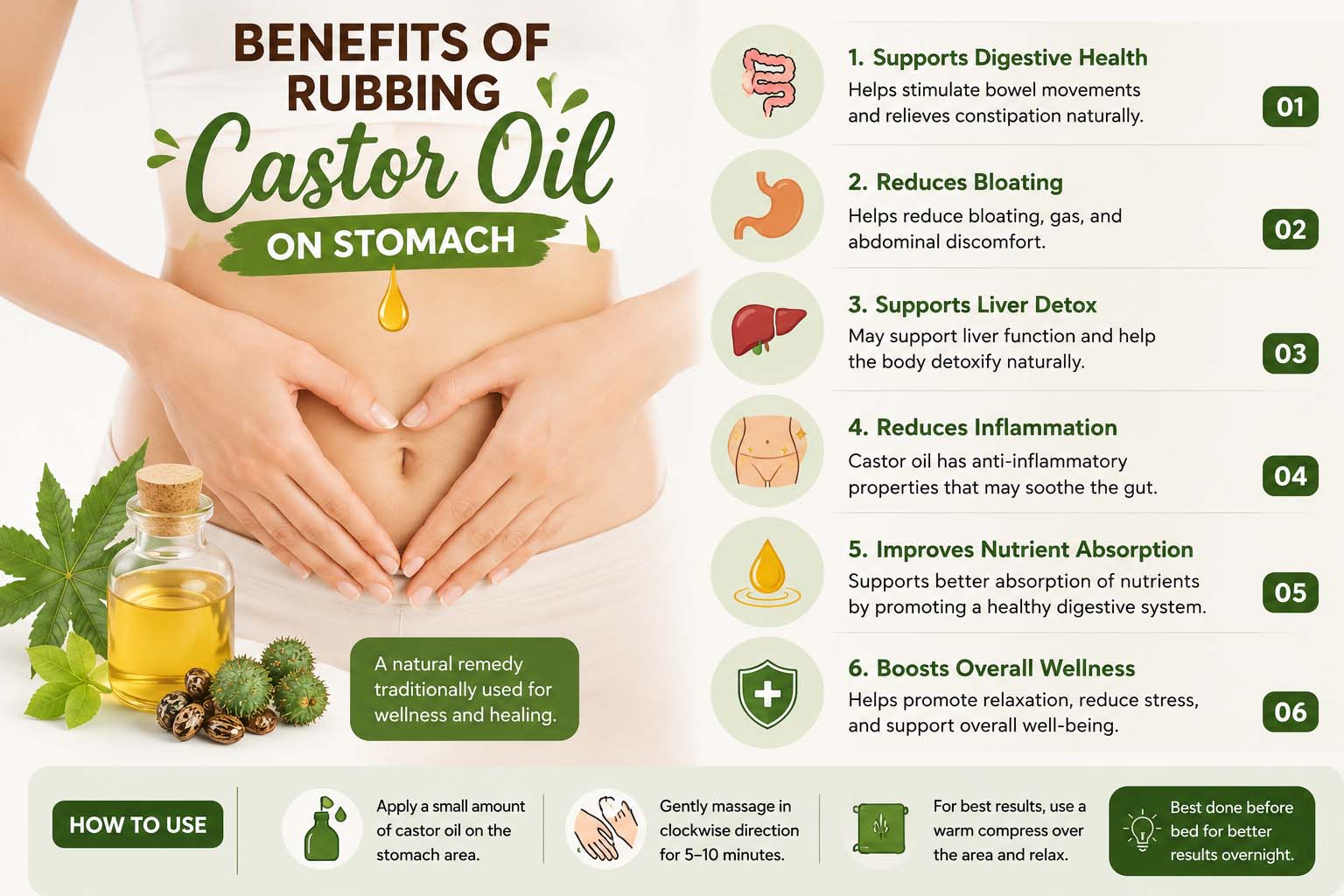
Potential Benefits of Rubbing Castor Oil on Stomach
Several possible benefits explain why this practice remains popular.
Nevertheless, the strength of scientific evidence varies considerably.
1. May Encourage Relaxation
One of the most practical benefits comes from the massage itself.
Gentle abdominal massage can create a calming experience and help some people release everyday tension.
For example, slowly massaging the abdomen while practicing deep breathing may make an evening routine more relaxing.
In addition, castor oil provides lubrication, allowing the hands to move smoothly over the skin.
However, researchers have not established that topical castor oil produces a unique relaxation effect beyond massage and personal comfort.
2. Helps Moisturize Dry Skin
Castor oil acts as an emollient, making it useful for softening dry skin.
When applied appropriately, it can help:
- Reduce the feeling of dryness
- Improve skin softness
- Limit moisture loss
- Make rough areas feel smoother
For example, someone with dry abdominal skin may appreciate the oil’s thick texture.
However, castor oil can also irritate sensitive skin.
Therefore, a patch test is sensible before applying it to a larger area.
3. Makes Abdominal Massage More Comfortable
Massage oils reduce friction between the hands and skin.
As a result, they can make gentle movements feel smoother and more comfortable.
Castor oil’s thick consistency makes it suitable for this purpose, although some people may prefer a lighter oil.
In addition, the massage itself may provide a sense of comfort.
However, this does not prove that castor oil penetrates deeply enough to change digestive function.
4. May Ease Temporary Feelings of Tightness
Some people report feeling less tense after a gentle abdominal massage.
For example, slow movements may help them relax their abdominal muscles.
However, the effect may come from touch, rest, or reduced stress rather than the oil.
Therefore, avoid treating this practice as a remedy for persistent abdominal pain.
5. Can Support a Calming Self-Care Routine
Simple wellness routines can encourage people to slow down.
For example, spending a few minutes applying moisturizer and practicing gentle breathing may provide a peaceful break before bedtime.
In addition, a consistent evening routine can help people separate daily activities from rest.
Similarly, learning about the benefits of drinking warm water may help you explore another simple hydration habit.
However, neither habit should replace appropriate medical treatment.
What Does Scientific Evidence Actually Support?
Many online discussions describe a wide range of health benefits.
However, research does not support all these claims equally.
| Claimed Benefit | What the Evidence Suggests |
|---|---|
| Skin moisturization | Castor oil can act as an emollient |
| Easier abdominal massage | The oil provides lubrication |
| Relaxation | Gentle massage and rest may help some people relax |
| Temporary relief from tightness | Some people report comfort, but evidence for the oil itself is limited |
| Improved digestion | No convincing evidence that topical castor oil improves digestion |
| Constipation relief | Topical castor oil has not demonstrated the laxative effects of oral castor oil |
| Detoxification | No reliable evidence supports this claim |
| Belly fat reduction | No scientific evidence supports topical fat loss |
Therefore, the most realistic expectations involve skin care and the experience of gentle massage.
In contrast, claims about detoxification, weight loss, or treating digestive disease lack convincing support.
Can Rubbing Castor Oil on Your Stomach Help Digestion?
Digestive health is one of the most common reasons people try this practice.
However, current evidence does not establish that castor oil applied to the skin improves digestion.
Oral castor oil acts differently because it enters the digestive tract.
In contrast, rubbing the oil onto the abdomen does not produce a proven stimulant laxative effect.
What About Abdominal Massage?
Some research suggests that abdominal massage may help certain people with constipation-related symptoms.
However, those findings do not demonstrate a special benefit from castor oil.
For example, a person may feel more comfortable after gentle massage because the activity encourages relaxation.
Nevertheless, constipation has many possible causes.
Therefore, persistent or recurring symptoms deserve medical assessment rather than reliance on topical remedies.
Can Castor Oil Reduce Bloating?
Some people report less bloating after using castor oil packs or massaging their abdomen.
However, researchers have not established that topical castor oil directly reduces intestinal gas.
Possible explanations for temporary comfort include:
- Gentle abdominal massage
- Relaxation
- Resting quietly
- Reduced muscle tension
- Mild external warmth
For example, someone who feels tense after a stressful day may notice that a relaxing routine makes abdominal discomfort less noticeable.
Nevertheless, the oil itself has not demonstrated a direct gas-relieving effect.
If bloating becomes frequent, severe, or persistent, consult a healthcare professional.
Benefits of Applying Castor Oil Before Bed
Nighttime is a popular time for abdominal massage because many people have fewer distractions.
A gentle routine may:
- Encourage relaxation
- Moisturize dry skin
- Provide a calming bedtime ritual
- Make massage more comfortable
- Create time for slow breathing
For example, you might spend five minutes applying a small amount of oil and gently massaging the skin.
Afterward, you can continue with reading, stretching, or another relaxing activity.
However, you do not need to leave castor oil on overnight to obtain its moisturizing effect.
In addition, overnight application may increase contact time and cause irritation in some people.
Therefore, wash it off if your skin becomes uncomfortable.
Black Castor Oil vs. Regular Castor Oil
Another common question concerns the benefits of rubbing black castor oil on the stomach.
Black castor oil typically comes from a process that involves roasting castor seeds before extraction.
As a result, it has a darker appearance and often a stronger scent.
Comparison of the Two Types
| Feature | Regular Castor Oil | Black Castor Oil |
|---|---|---|
| Appearance | Usually pale yellow | Usually dark brown |
| Scent | Generally mild | Often stronger or roasted |
| Common Uses | Skin care, cosmetics, hair care | Hair care and skin care |
| Texture | Thick | Thick |
| Moisturizing Potential | Can soften skin | Can soften skin |
| Proven Digestive Benefits From Topical Use | None established | None established |
Although their processing methods differ, researchers have not demonstrated that black castor oil offers superior abdominal health benefits.
Therefore, personal preference and skin tolerance matter more than claims about digestive effects.
How to Apply Castor Oil to Your Stomach Safely
If you want to try castor oil for moisturizing or gentle massage, use a cautious approach.
Step 1: Check Your Skin
First, make sure the skin is healthy and free from cuts, rashes, or infections.
Avoid applying oil to irritated or damaged areas.
Step 2: Perform a Patch Test
Apply a small amount to a limited area of skin.
Then, monitor the area for irritation before using the product more widely.
If redness, itching, or a rash develops, stop using it.
Step 3: Use a Small Amount
Place a little oil on clean hands.
Room-temperature oil is suitable, so heating is unnecessary.
However, if you prefer slightly warm oil, make sure it is not hot enough to burn your skin.
Step 4: Massage Gently
Use light circular movements for a few minutes.
For example, you can combine the massage with slow breathing.
However, avoid deep pressure, particularly if your abdomen feels painful or tender.
Step 5: Remove Excess Oil
Afterward, wipe away excess oil or wash the area with mild soap and water.
In addition, keep the oil away from your eyes and mouth.
If you experience irritation, stop the routine.
Castor Oil Packs: How Are They Different?
A castor oil pack generally involves applying oil to a cloth and placing the cloth against the skin.
Some traditional routines also include external warmth.
For example, a person may rest quietly while the cloth remains over the abdomen.
However, research has not established that castor oil packs detoxify the body or treat digestive disorders.
Important Safety Considerations
If you use a pack:
- Apply it only to intact skin
- Avoid excessive oil
- Do not use it over unexplained abdominal pain
- Avoid very hot heating pads
- Never sleep with an electric heating pad switched on
- Stop if irritation develops
In addition, avoid using castor oil packs during pregnancy unless your healthcare professional specifically approves the practice.
Although a warm compress may feel soothing, excessive heat can cause burns.
Therefore, use warmth cautiously rather than assuming hotter temperatures provide better results.
What People Say About Castor Oil on Reddit
People sometimes search for benefits of rubbing castor oil on stomach Reddit discussions because they want to hear personal experiences.
Online wellness conversations commonly describe:
- Relaxation after massage
- Softer skin
- A calming bedtime routine
- Temporary feelings of digestive comfort
- Enjoyment of warm compresses
However, personal reports cannot establish whether castor oil caused a particular result.
For example, someone may feel better because they rested, reduced stress, or massaged their abdomen.
In addition, symptoms such as bloating can improve naturally over time.
Therefore, treat personal experiences as individual observations rather than medical evidence.
Common Myths About Castor Oil and Belly Health
Several popular claims go beyond what research supports.
Myth 1: Castor Oil Burns Belly Fat
There is no scientific evidence that rubbing castor oil onto the abdomen burns fat or reduces waist size.
Body fat does not disappear because someone applies oil to the skin.
Instead, long-term weight management generally involves nutrition, physical activity, sleep, and other individual health factors.
For example, learning about the best time to workout may help you develop a consistent exercise schedule.
Myth 2: Castor Oil Removes Toxins
Some wellness claims suggest that castor oil packs remove toxins through the skin.
However, reliable scientific evidence does not support this idea.
The liver and kidneys already perform essential roles in processing and removing waste substances.
Therefore, applying castor oil does not replace these normal biological functions.
Myth 3: Castor Oil Cures Digestive Disorders
Topical castor oil does not have an established role in treating digestive diseases.
For example, it should not replace prescribed treatment for chronic constipation or other gastrointestinal conditions.
In addition, persistent symptoms may indicate a problem that needs professional evaluation.
Therefore, seek medical advice rather than relying on repeated abdominal applications.
Is Castor Oil Safe for Everyone?
Many people tolerate castor oil on intact skin, but it can cause irritation or allergic contact dermatitis.
In addition, certain situations require extra caution.
Avoid abdominal application if you have:
- Broken or infected skin
- An unexplained rash
- Known sensitivity to castor oil
- Significant abdominal tenderness
- Unexplained abdominal pain
Pregnant people should avoid castor oil abdominal packs or therapeutic applications unless their maternity healthcare professional approves them.
Likewise, anyone with a recent abdominal operation or an underlying medical condition should seek advice before massaging the area.
Although topical use differs from swallowing castor oil, the two should not be treated as interchangeable.
Possible Side Effects of Topical Castor Oil
Some people experience skin reactions after applying castor oil.
Possible symptoms include:
- Redness
- Itching
- Irritation
- Rash
- Contact dermatitis
- Allergic reactions
For example, someone with sensitive skin may notice itching after leaving the oil on for an extended period.
Therefore, begin with a small amount and avoid prolonged application until you know how your skin responds.
If irritation develops, wash the area and stop using the product.
However, seek urgent medical care if you experience signs of a severe allergic reaction, such as difficulty breathing or swelling of the face or throat.
Healthy Habits That Support Digestive Comfort
If your main goal is digestive wellness, focus on habits with stronger scientific support.
A balanced routine may include:
- Drinking enough water
- Eating fiber-rich foods
- Staying physically active
- Managing stress
- Getting adequate sleep
- Maintaining regular meal patterns
For example, dietary fiber supports normal bowel function.
In addition, our guide to foods high in fiber can help you identify useful dietary sources.
Regular physical activity also supports general health and may help some people maintain comfortable bowel habits.
Likewise, exploring the benefits of deadlifts can introduce one form of strength training, although deadlifts are not a specific treatment for digestive symptoms.
However, persistent digestive problems may require medical evaluation even when you maintain healthy habits.
Quick Safety Checklist
Before using castor oil on your abdomen, consider the following questions:
- Is my skin free from cuts, infections, and irritation?
- Have I checked for a possible skin reaction?
- Am I using a product intended for topical skin care?
- Am I avoiding excessive pressure or heat?
- Do I understand that digestive benefits remain unproven?
- Will I stop using it if irritation develops?
- Have I sought medical advice for persistent symptoms?
Following these precautions can help reduce avoidable risks.
When to See a Healthcare Professional
Castor oil should never delay medical assessment of concerning abdominal symptoms.
Seek medical attention if you experience:
- Persistent or worsening abdominal pain
- Recurrent or prolonged constipation
- Blood in your stool
- Unexplained weight loss
- Fever with abdominal symptoms
- Repeated vomiting
- Significant abdominal swelling
In particular, severe or sudden abdominal pain, a rigid abdomen, or an inability to pass stool or gas accompanied by vomiting requires urgent evaluation.
Therefore, do not attempt to treat these symptoms with abdominal massage or castor oil packs.
Frequently Asked Questions
Does Rubbing Castor Oil on the Stomach Help Constipation?
Current evidence does not establish that topical castor oil relieves constipation.
Although abdominal massage may help some people, applying the oil to the skin does not reproduce the proven laxative action of oral castor oil.
How Often Can I Apply Castor Oil to My Abdomen?
There is no medically established application schedule for digestive benefits.
However, occasional use as a moisturizer or massage oil may be reasonable if your skin tolerates it.
Stop if irritation develops.
Can Castor Oil Reduce Belly Fat?
No. There is no reliable evidence that topical castor oil burns abdominal fat or causes weight loss.
Is Black Castor Oil Better Than Regular Castor Oil?
Both types can soften the skin.
However, research has not established that black castor oil offers additional digestive or abdominal health benefits.
Should I Use Castor Oil Every Night?
Nightly use is not necessary.
If you choose to apply it regularly for moisturizing, monitor your skin for irritation.
In addition, avoid prolonged contact if your skin becomes sensitive.
Can I Sleep With Castor Oil on My Stomach?
Some people leave it on overnight, but doing so is not necessary for proven health benefits.
In fact, extended contact may increase irritation in sensitive individuals.
Therefore, removing excess oil before bed is a reasonable option.
Does Castor Oil Help With Menstrual Cramps?
Some people find gentle warmth or relaxation comforting during menstrual cramps.
However, researchers have not established that topical castor oil specifically treats menstrual pain.
If cramps are severe, unusual, or persistent, seek medical advice.
Key Takeaways: Benefits and Limitations
The benefits of rubbing castor oil on stomach are mainly associated with skin moisturization and the comfort of gentle massage.
For example, the oil can soften dry skin and make abdominal massage smoother. In addition, a quiet self-care routine may help some people relax.
However, current scientific evidence does not establish that topical castor oil improves digestion, removes toxins, relieves constipation, or reduces belly fat.
Therefore, use it with realistic expectations and appropriate skin precautions.
If you experience ongoing digestive symptoms or unexplained abdominal pain, seek medical guidance rather than relying on topical remedies.
When used cautiously on healthy skin, castor oil can be part of a relaxing personal care routine. Nevertheless, its role should remain supportive rather than medical.